
Famco Chimney Sweep in NoDa: A Homeowner’s Guide
If your chimney cap says “Famco” on it and your last sweep never mentioned it, that tells you something. It suggests they didn’t look closely at what they were working with. Famco products turn up in NoDa chimneys often enough that a technician should recognize them on sight, and knowing what you have installed matters when it’s time to clean, repair, or replace a component. This guide covers how to identify your Famco parts, why they change the cleaning approach, and what to ask before anyone climbs onto your roof.
If you’d rather have someone who already knows the system take a look, call (844) 625-7169. We answer 24/7.
What Famco Products Turn Up in NoDa Chimneys?
The Famco components we encounter most in NoDa homes fall into three groups: draft-assist caps, B-vent components, and flexible liner systems. Each one affects how a chimney gets cleaned and maintained, and each is identifiable without pulling anything apart. A draft-assist cap sits on top of the flue and uses a rotating or wind-driven mechanism to improve pull. B-vent components are the double-wall metal pipe sections you’ll see on gas appliance flues, usually with a visible inner and outer wall. Flexible liner systems run the length of the flue and are typically recognizable by their corrugated stainless appearance.
Here’s how to figure out what you have before anyone shows up:
- Look at the cap from the ground with binoculars. A draft-assist model has moving parts and a distinctive shape compared to a flat or domed cap.
- Check the appliance manual. If your fireplace or stove uses a vented gas appliance, the manual will name the venting category and often the components.
- Look up the flue from the firebox with a flashlight. A corrugated metal wall where you’d expect clay tile means a liner is installed.
- Note any stamping or labeling on visible components. Famco parts often carry a manufacturer mark.
None of this requires getting on the roof. A visual from the ground and a look up the flue gives you enough to have a useful conversation. When a full evaluation is needed, that’s a separate service from a routine chimney sweep, and it should be treated that way: documented, not rushed.
Why Famco Cap and Liner Specs Change the Cleaning Protocol
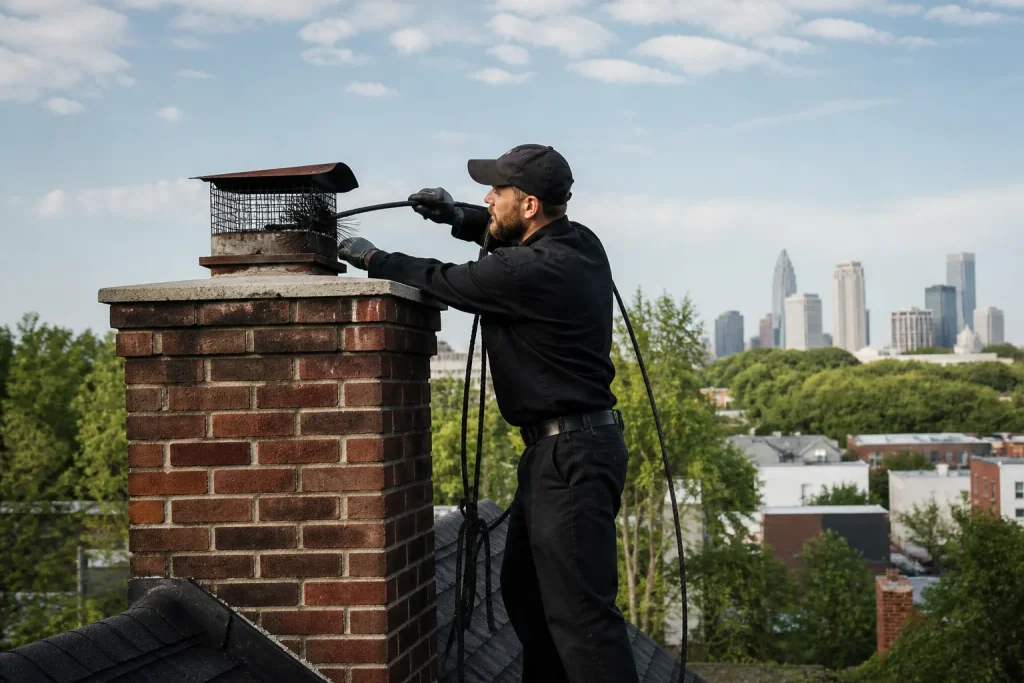
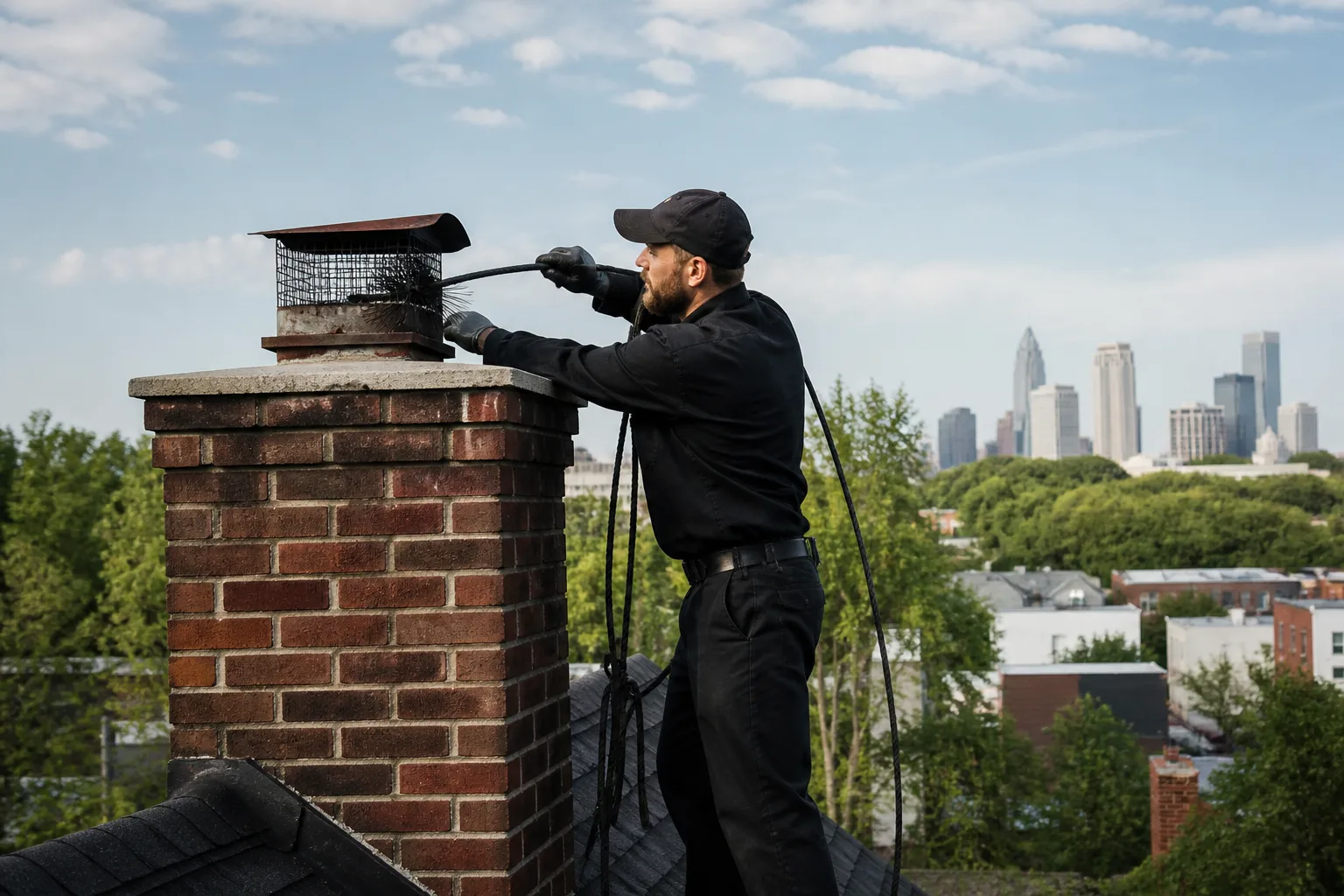
Using the wrong brush diameter or rod type on a proprietary liner system can damage it. That’s the practical reason specifications matter. A flexible liner has a specific inside diameter and a specific wall construction. A brush sized for a standard clay flue can be too aggressive on a corrugated stainless liner, and a stiff poly brush run at the wrong speed can abrade the surface over repeated cleanings. The liner doesn’t fail in a day. It wears, slowly, and the damage is invisible until it matters.
Draft-assist caps add a different wrinkle. The rotating mechanism has to be handled correctly during cleaning, and some sweep technicians remove the cap for access and then reinstall it without checking that the mechanism still spins freely. A cap that comes off and goes back on crooked can bind. That’s not a cleaning problem on the day of service. It becomes one the first cold night the draft doesn’t pull.
In our experience, the technicians who cause problems with liner systems aren’t careless on purpose. They’re working from a general playbook that assumes every flue is clay tile. If the technician doesn’t recognize a Famco liner or a similar system, ask them to stop and confirm the brush size before they start. Professional-grade materials like DuraFlex flexible liners are built to last, but they’re built to a spec, and the cleaning has to respect that spec. If you want the full picture of your system rather than just a sweep, a structured inspection is the right starting point.
Famco Draft Cap Maintenance: What to Check and When
A draft-assist cap needs two things: a mechanism that spins freely and a clean path for air. When either fails, you get draft problems that look like other problems. Smoke rolls into the room when you light a fire. The fireplace feels sluggish. On a gas appliance, you might notice condensation or a smell that shouldn’t be there. Those symptoms can come from a blocked flue, a closed damper, or a draft cap that’s stopped doing its job.
What to check on a routine basis:
- Spin test from the ground. On a calm day, watch the cap. If it’s designed to rotate, it should move in light wind. A mechanism that’s frozen or grinding is a maintenance issue.
- Look for debris. Leaves, twigs, and bird nesting material collect around the mechanism and in the cap housing. That’s a cleaning item, not a replacement one.
- Check for corrosion or bent components. A visibly warped or corroded mechanism is usually past lubrication.
- Listen for squealing or grinding. That noise means bearings are dry or worn. Lubrication may help a dry mechanism. A worn bearing or a seized unit needs replacement.
Lubrication versus replacement comes down to whether the mechanism still moves and whether the housing is intact. If it spins but is noisy, a technician can address it during a sweep visit. If it’s seized, bent, or the housing is compromised, replacement is the honest answer. Draft failure that persists after those checks usually points to the flue itself, not the cap, and that’s when a closer look pays off.
Replacing a Famco Component: Match the Spec, Not Just the Brand
When a Famco cap or liner component needs replacement, matching the material spec matters more than matching the brand. A same-brand part in the wrong size or a different wall thickness can create a worse problem than a different brand in the correct spec. The cap has to fit the flue dimension and be rated for the appliance type. The liner has to match the appliance’s venting category, the flue’s inside diameter, and the fuel type. Get one of those wrong and the installation doesn’t meet the appliance manufacturer’s requirements, regardless of whose name is on the box.
This is where a lot of NoDa homeowners get stuck, because the sweep who cleaned the chimney last year may not be the person who can install a properly matched replacement. Sweeping and component replacement are different skill sets. A cap installation or a reline is closer to structural work than maintenance work.
What to check on any replacement estimate:
- The proposed part’s dimensions against your actual flue measurements
- The venting category or appliance rating the part is listed for
- Whether the installer is working from a documented inspection or a guess
- Whether the person quoting the replacement is the same person who’ll install it
We source from a range of professional brands including Olympia Chimney and DuraFlex, and we work with Famco components regularly, because the right answer depends on the system, not on a house brand. A chimney cap & crown job is a good example: the cap has to protect the crown, and the crown has to be sound before the cap goes on. One company handling both avoids the back-and-forth.
What to Tell Your Chimney Contractor Before They Arrive
If you know you have Famco components installed, say so when you book the appointment. Then ask two questions. First: does the technician recognize the system and know how to clean it without damaging it? Second: if something needs replacing, can they supply a properly matched component, or will they refer it out? The answers tell you a lot. A sweep-only operation will refer the replacement work. A full-system company will handle it.
The reason those two questions matter is simple. A cleaning that damages a liner is expensive to fix later. A replacement that doesn’t match spec is a safety issue, not just a performance one. You deserve to know who’s accountable for the whole job.
When to call a pro
Draft problems that persist after a cap check, visible damage to a liner, a firebox that’s pulling away from the surround, or a cap that’s been loose since the last storm are all worth a professional look. So is a chimney you’ve never had evaluated, Famco parts or not. In our experience, the earlier a system gets looked at, the simpler the fix tends to be.
Related services in NoDa: fireplace repair for firebox and damper issues, and a full chimney inspection when you want a documented assessment before deciding on repair.
The Bottom Line
Famco components are common in NoDa chimneys, and knowing what you have installed helps you ask better questions and get better work. The three things worth remembering: identify your cap and liner type before service, make sure the technician matches brush and rod specs to your system, and confirm that whoever cleans the chimney can also correctly replace a component if one fails. Our technicians have up to 13 years of experience, and we inspect it, we fix it, with no referrals and no runaround. From cap to firebox, one company handles it all.
If you’re in NoDa and need help, Chimney Sweep NoDa offers free estimates. Call (844) 625-7169. We answer 24/7.
Frequently Asked Questions
Look for a manufacturer stamp on the cap or any visible venting components, check your appliance manual for the venting category, and have a technician look up the flue. A draft-assist cap has moving parts visible from the ground, and a flexible liner shows as a corrugated metal wall inside the flue where clay tile would normally be. If you’re not sure, a structured inspection settles it.
Not always. A Famco flexible liner has a specific inside diameter and wall construction, and a brush sized for standard clay tile can wear the liner surface over repeated cleanings. Ask the technician to confirm the brush diameter and rod type before starting. A sweep who can’t answer that question isn’t the right fit for a liner system.
Not necessarily. Matching the material spec, flue dimensions, and appliance venting category matters more than matching the brand name. A correctly spec’d part from a different manufacturer outperforms a same-brand part in the wrong size. Get the measurements and venting category confirmed first, then choose the component that fits them.
Check the rotating mechanism seasonally. It should spin freely and be clear of debris. Lubrication can address a mechanism that still moves but is noisy or stiff. A seized, bent, or corroded unit needs replacement. If draft problems continue after the cap checks out, the flue itself needs a look.
Written by the team at Chimney Sweep NoDa.
Need Chimney Cleaning Help?
Call Chimney Sweep NoDa - the local pro we connect you with is licensed and insured, with free written estimates in NoDa.
(844) 625-7169